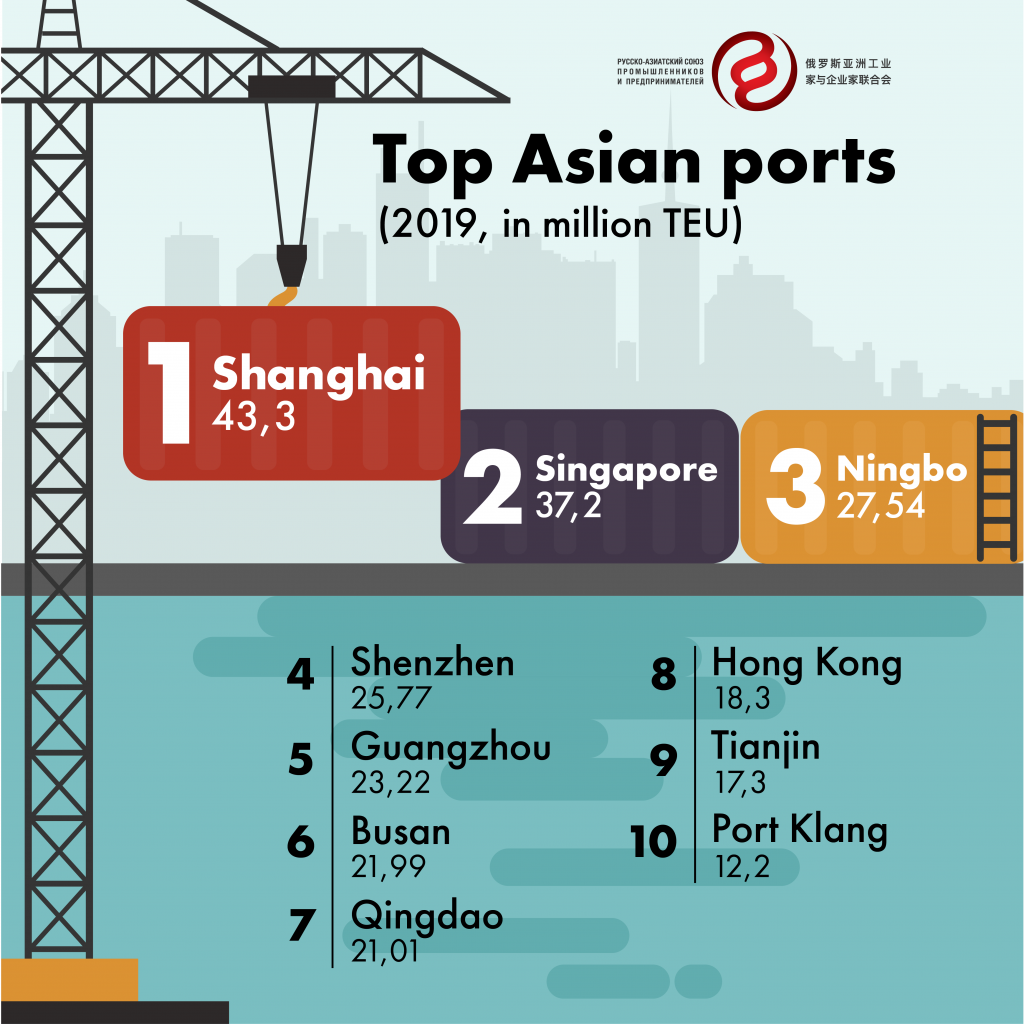
Asia today is the center of world trade and economy. Ports in Asia account for more than 60% of the world's sea freight, and this share can be predicted to increase in the future. At the moment, of the TOP-10 ports in the world in terms of freight traffic, 9 are located in Asia and only 1 in Europe - Rotterdam. Of the TOP-10 Asian ports, 8 are located in East Asia, of which 7 are in China, 1 in Korea, the remaining 2 are located in Southeast Asia.
10th place. Port Klang
Port Klang is the largest seaport in Malaysia and the 12th in the world in terms of turnover. The port is located 40 kilometers from Kuala Lumpur, therefore it is also called the "sea gate" of the capital, as it has always been one of the main trade facilities in Malaysia. Port Klang is connected by trade routes with more than 500 ports in 120 countries of the world. Its location in the Strait of Malacca makes it an important staging post for the transit of goods from Asia to Europe. The port's cargo turnover is 12.2 million TEU.
9th place. Tianjin
Tianjin Port is the largest seaport in the north of China located 170 kilometers from Beijing. The port is connected by trade routes with 600 ports in 180 countries of the world. The port is also one of the develpment drivers of the Tianjin Economic and Technological Development Zone, where the manufacturing enterprises of the world's largest companies are located, 76 companies from the Fortune 500 rating are located here. The port's cargo turnover is 17.3 million TEU.
8th place. Hong Kong
The port of Hong Kong has played a key role in trade between Europe and Asia throughout history. Later, when Hong Kong acquired the status of a free port, it became an attractive location for international trading companies. Today, the Port of Hong Kong is part of the Maritime Silk Road and the gateway to China. It is no longer the busiest port in the world, but it retains a key position in the global shipping system. The port's cargo turnover is 18.3 million TEU.
7th place. Qingdao
Qingdao Seaport is located in Shandong Province and is an important transportation hub in East Asia. It has maritime connections with 700 ports in 180 countries around the world. The port of Qingdao is deep-water and can accommodate the world's largest cargo ships and oil tankers. The port is also part of the "One Belt - One Road" Initiative, with a well-developed rail, road and pipeline infrastructure, enabling efficient transportation of all cargo. The port's cargo turnover is 21.01 million TEU.
6th place. Busan
Busan is the largest port in the Republic of Korea and one of the largest ports in East Asia. It is part of China's "One Belt - One Road" Initiative and is actively involved in the development of multimodal transport from Asia to Europe. Busan has close ties with the ports of China and Japan and is a major transshipment center in the Asia-Pacific region. The port is also deep water and can accommodate large merchant ships. The port's cargo turnover is 21.99 million TEU.
5th place. Guangzhou
The port of Guangzhou is one of the central infrastructure facilities that ensure the export of Chinese products to other regions of the world. Its development paralleled the development of Guangdong province in the framework of the "reform and opening-up" policy. It provides transportation of goods for the entire Pearl River Delta region. The port's cargo turnover is 23.22 million TEU.
4th place. Shenzhen
Shenzhen Port is another port in Guangdong province, which is the result of "reform and opening-up" policy. In recent decades, the Shenzhen port has been gradually siphoning off the traffic of the Hong Kong port, becoming the most important logistics hub in the region. However, at the moment, the ports function in an interconnected manner, since they have different tax and customs regimes, this determines the fact that the Shenzhen port is more focused on exporting products. The port's cargo turnover is 25.77 million TEU.
3rd place. Ningbo
The Ningbo deep-water port is a huge complex with 191 berths, 39 deep-water berths, an oil terminal and a berth for receiving liquid chemical products, as well as other infrastructure facilities that allow you to work with various types of cargo. Ningbo Port is also a major logistics center for e-commerce enterprises. The port's cargo turnover is 27.54 million TEU.
2nd place. Singapore
The Port of Singapore has long been the world's largest port in terms of tonnage and cargo turnover, serving as a key logistics hub in the Straits of Malacca, which connects the Pacific and Indian Oceans. The port of Singapore is currently undergoing reorganization. A new technologically advanced automated port space is being created, which will become the largest automated port in the world by 2040. . The port's cargo turnover is 37.2 million TEU.
1st place. Shanghai
In 2005, Shanghai overtook Singapore in terms of cargo turnover and took first place in the world. Shanghai Port is the most important logistics hub for the Yangtze River Delta Economic Region, providing logistics for Anhui, Jiangsu, Zhejiang and Henan provinces. In fact, Shanghai is the most important element in China's foreign trade policy. The port's cargo turnover is 43.3 million TEU.



.png "Пресс-центр")
.JPG "IMG_0978 (1).JPG")